
COE Bidding Results, November 2026 First Round: Cat A Sets a New High and Pulls Away From Cat B

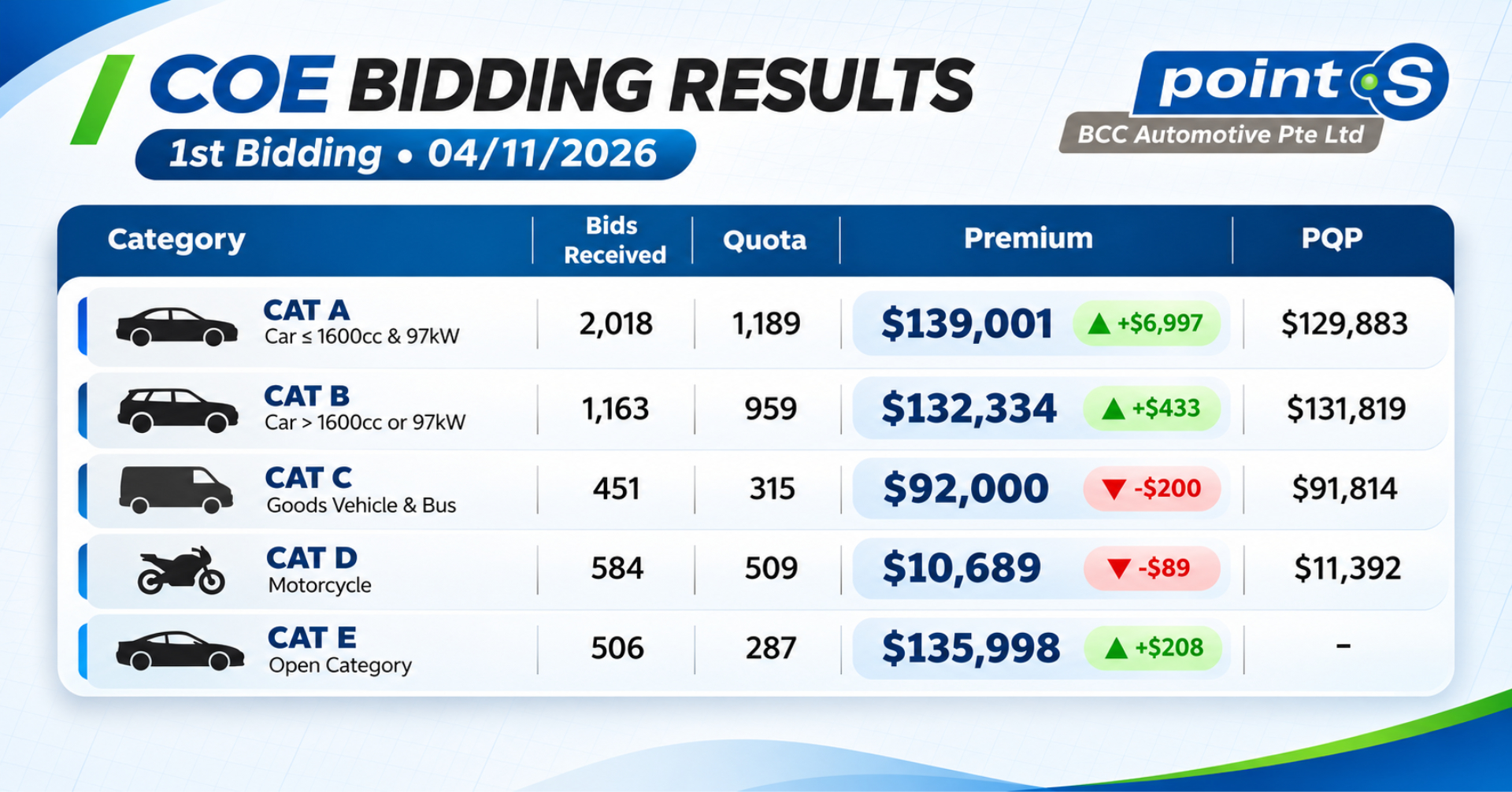
Cat A closed at $139,001 in the first COE bidding of November 2026, up $6,997 from the previous round and a new record. It now sits $6,667 above Cat B, which closed at $132,334. If you are renewing your COE, the prevailing quota premium (PQP) for November is $129,883 for Cat A and $131,819 for Cat B.
The exercise closed on 4 November 2026 at 4pm. Below is the full breakdown, why the gap between Cat A and Cat B keeps shifting, and what to check on your car before you commit to a renewal.
COE Results at a Glance (4 November 2026)
- Cat A (cars up to 1,600cc and 97kW): $139,001, up $6,997
- Cat B (cars above 1,600cc or 97kW): $132,334, up $433
- Cat C (goods vehicles and buses): $92,000, down $200
- Cat D (motorcycles): $10,689, down $89
- Cat E (open category): $135,998, up $208
Both car categories and Cat E went up. Cat C and Cat D eased slightly. Cat A did almost all of the moving this round.

Category A: $139,001
- Premium: $139,001 (up $6,997)
- Bids received: 2,018
- Quota: 1,189
- November PQP: $129,883
2,018 bids chased 1,189 certificates, roughly 1.7 bids for every COE on offer. Cat B, by comparison, saw about 1.2 bids per certificate, and that difference in competition explains the size of the jump. The Cat A quota for the November to January period is 7,134, essentially unchanged, so there was no extra supply to soften the demand.
For a buyer, this means a small car is no longer the cheaper way in. For an existing owner, it makes renewal more attractive. Your November PQP is $129,883, which is $9,118 below today's Cat A premium.
Category B: $132,334
- Premium: $132,334 (up $433)
- Bids received: 1,163
- Quota: 959
- November PQP: $131,819
Cat B barely moved. With 1,163 bids for 959 certificates, competition was noticeably lighter than in Cat A. The November PQP of $131,819 is only $515 below the live premium, so for Cat B owners the price advantage of renewing is small this month.
Category C: $92,000
- Premium: $92,000 (down $200)
- Bids received: 451
- Quota: 315
- November PQP: $91,814
Goods vehicles and buses dipped slightly. Renewing and bidding are almost level, with the PQP just $186 under the premium.
Category D: $10,689
- Premium: $10,689 (down $89)
- Bids received: 584
- Quota: 509
- November PQP: $11,392
Motorcycle COE eased again. This is the one category where the live premium is lower than the PQP, by $703. If you ride and your COE is due, that is worth knowing before you pay for a renewal.
Category E: $135,998
- Premium: $135,998 (up $208)
- Bids received: 506
- Quota: 287
Cat E can be used for any vehicle except a motorcycle, and it usually tracks Cat B. This round it closed $3,664 above Cat B but $3,003 below Cat A, which shows how unusual Cat A's position has become.
Why Cat A Keeps Overtaking Cat B

On paper, Cat B should always cost more. Bigger engines, more power, pricier cars. In recent rounds, Cat A has been the more expensive certificate, and there are two reasons.
The first is that the line between the categories has blurred. Many electric cars are assessed on motor output, and a growing number of models sit just under the Cat A power limit while performing like cars that used to need a Cat B certificate. Buyers who want a quick, well-equipped car are now bidding in Cat A.
The second is supply. The Cat A quota for the current period is flat at 7,134, while the Cat B quota rose 3.3% to 5,707. More Cat B certificates, the same number of Cat A certificates, and demand drifting towards Cat A produces exactly the result we saw today.
Is the Cat A and Cat B merger happening?
Not yet. The public consultation on merging the two categories closed on 2 November 2026. No decision has been announced, and findings are expected in the first half of 2027. Until then, the two categories will keep being bid separately.
What Does This Mean If You Are Renewing Your COE?
When your COE expires, you can renew it for 5 or 10 years by paying the PQP, which is the moving average of the last three months of premiums in your category. It updates after every bidding exercise.
The November 2026 PQPs are:
- Cat A: $129,883
- Cat B: $131,819
- Cat C: $91,814
- Cat D: $11,392
If you own a Cat A car, renewing now costs $9,118 less than the live premium. Because the PQP is an average, it will rise over the next few months if bidding stays this high, so waiting is likely to cost more, not less.
A lower PQP only makes sense if the car is worth keeping, though. A renewal commits you to another five or ten years, and the premium is only part of the bill.
Check the car before you renew
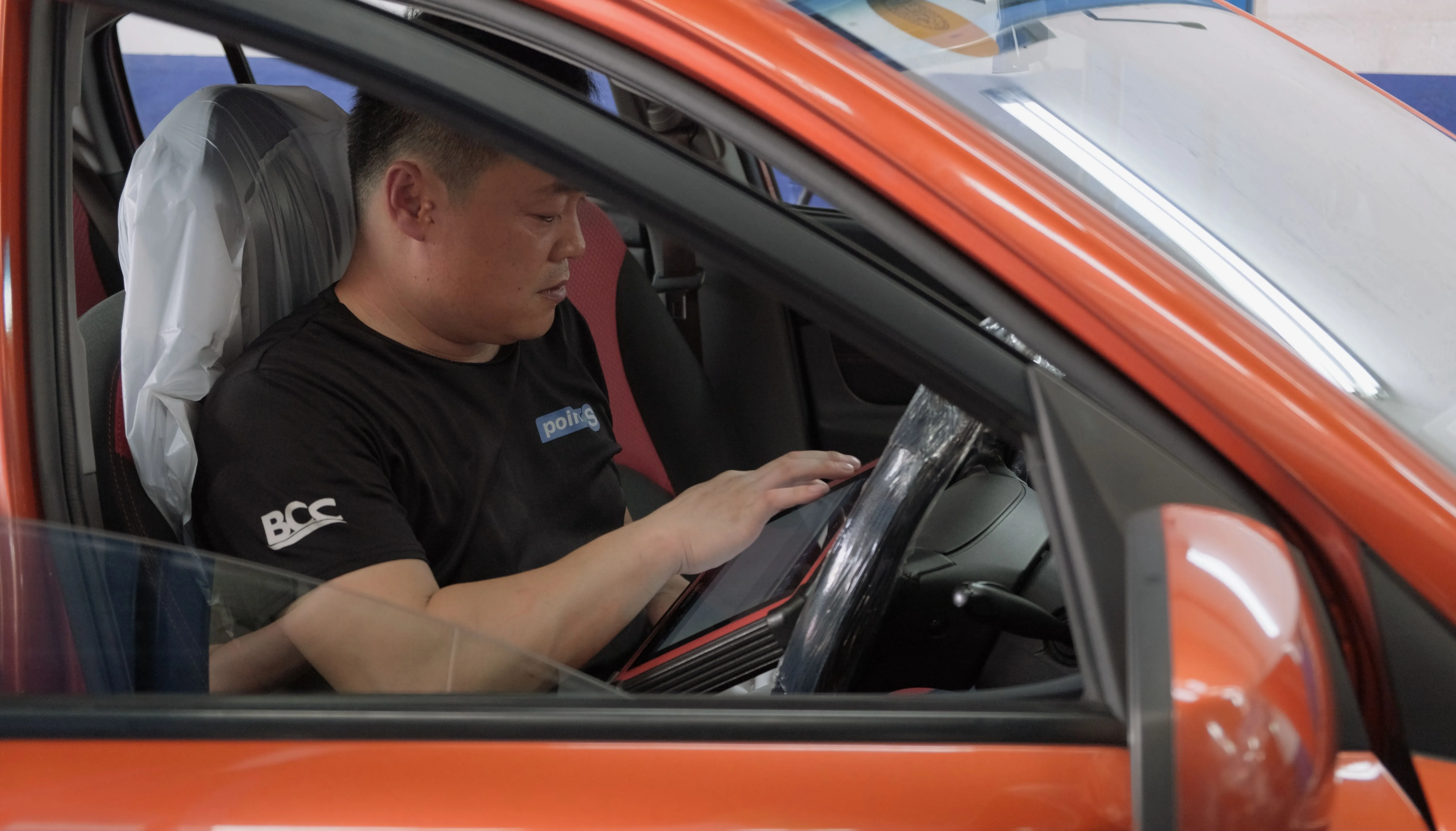
Before you pay for a renewal, have the car properly inspected. These three areas most often turn a sensible renewal into an expensive one:
- Engine and electronics. A full diagnostic scan reads stored fault codes and shows whether any system is on its way out before it becomes a breakdown.
- Air-conditioning. In Singapore, a weak compressor or a slow leak is a daily problem. Our guide on why your car aircon is not cold explains what a proper check covers.
- Battery. An ageing battery is cheap to replace on your terms and expensive to replace at the roadside. See our guide to car battery replacement in Singapore.
If the inspection comes back clean, you can renew with confidence. If it does not, you will know the repair bill before you commit. For the wider picture, read our guide on whether to renew your COE or buy a new car.
When Is the Next COE Bidding?
The next exercise runs from 16 to 18 November 2026, closing at 4pm on 18 November. The last exercise of the year opens on 7 December. The next quota announcement is due in January 2027.
COE Results FAQ
What was the Cat A COE premium in November 2026?
Cat A closed at $139,001 in the first bidding exercise of November 2026, up $6,997 from the previous round. There were 2,018 bids for 1,189 certificates.
What was the Cat B COE premium in November 2026?
Cat B closed at $132,334, up $433 and $6,667 below Cat A. There were 1,163 bids for 959 certificates.
What is the PQP for COE renewal in November 2026?
The November 2026 PQP is $129,883 for Cat A, $131,819 for Cat B, $91,814 for Cat C and $11,392 for Cat D. This is the amount you pay to renew an expiring COE.
Is it cheaper to renew a COE or bid for a new one right now?
For Cat A, renewing is cheaper by $9,118. For Cat B the gap is only $515, and for Cat C it is $186. For motorcycles, the live premium is currently $703 lower than the PQP. The right choice also depends on your car's condition and how long you plan to keep it.
When is the next COE bidding exercise?
The next exercise is 16 to 18 November 2026, closing at 4pm on 18 November. The one after opens on 7 December 2026.
Car Inspection Before COE Renewal at BCC Automotive Singapore

A renewal is one of the bigger financial decisions a car owner makes, and it should rest on what is actually right or wrong with the car. BCC Automotive has been servicing cars in Singapore since 1975. Our technicians can run a pre-renewal inspection covering diagnostics, aircon, battery, brakes and suspension, then explain clearly what needs attention now and what can wait.
Book an inspection at our Sin Ming or Toh Tuck workshop through our online booking page, or WhatsApp us with your car model and COE expiry date.
Sin Ming: Blk 1 Sector C, #01-101/103/105, Sin Ming Industrial Estate
Toh Tuck: 50 Old Toh Tuck Road
Source: COE bidding results and quota figures published by the Land Transport Authority.